
How Physiotherapy Helps Post-Surgery Recovery

Updated: 5 days ago
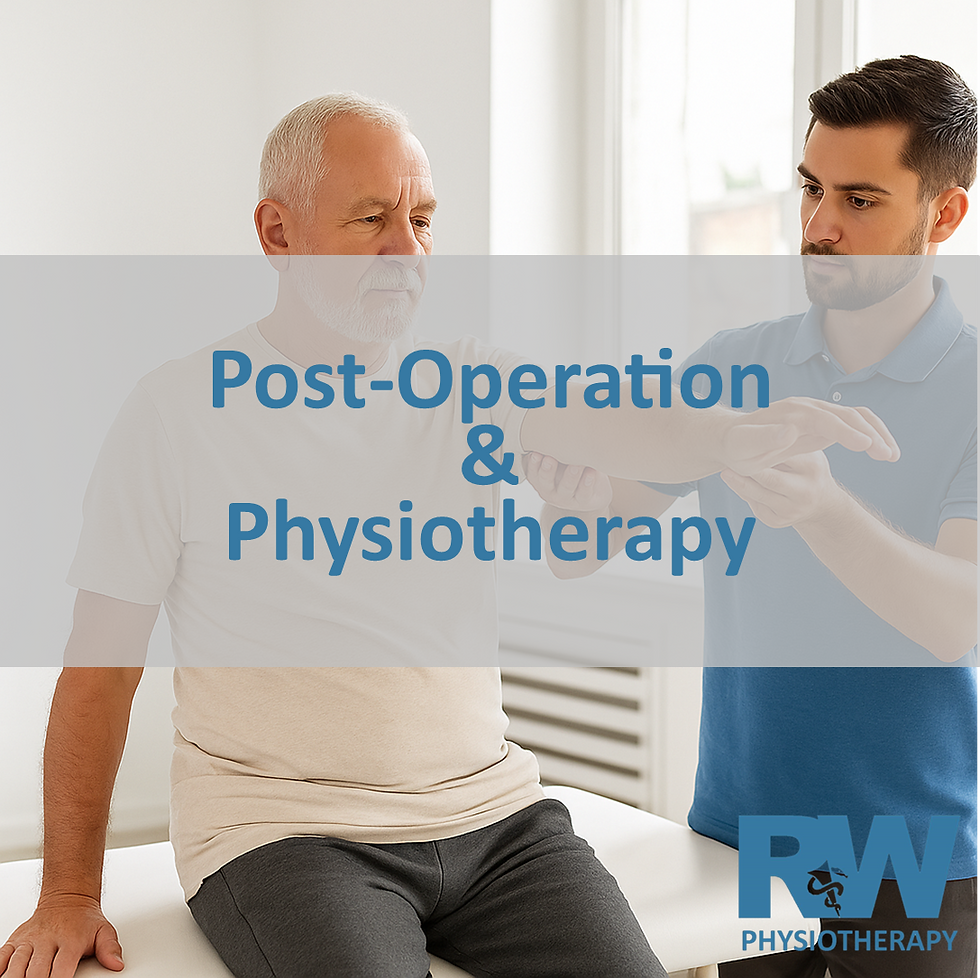
Surgery, whether planned or urgent, is a significant event. While it often solves an important health problem, it also places considerable strain on the body. Recovery doesn't end in the operating theatre: rehabilitation is an essential next step, and physiotherapy plays a key role in a safe, effective recovery.
This post explains how physiotherapy supports recovery after surgery, the approaches used, and why early and consistent rehabilitation matters.
Common Challenges After Surgery
Recovering from surgery involves more than wound healing. Common challenges include:
Pain and swelling. Pain and swelling are normal after surgery. Both can limit movement and make everyday activities difficult.
Loss of strength. Muscle strength can drop quickly after surgery, particularly when movement is restricted. Even a few days of inactivity can cause a noticeable loss of muscle.
Reduced range of motion. Surgery, especially on the knee, shoulder or hip, often leaves joints stiff. If this isn't addressed, it can affect everyday function.
Risk of complications. Reduced mobility increases the risk of complications such as blood clots and chest infections. Getting moving safely and early helps reduce this risk.
Psychological impact. Surgery can be physically and emotionally draining. Anxiety, low mood or fear of movement can make it harder to engage in recovery.
Physiotherapy helps with these challenges through exercise, movement guidance, education and support.
The Role of Physiotherapy After Surgery
Physiotherapists assess how you're moving and functioning, identify limitations and create a personalised recovery plan with clear milestones. The main goals are:
1. Managing Pain and Swelling
Hands-on treatment: gentle massage and joint mobilisation may ease discomfort and stiffness in the short term.
Ice, heat and electrical stimulation: these can help ease pain and swelling in the short term.
Guided movement: regular gentle movement helps prevent stiffness and often eases pain.
Keeping pain manageable helps you take part in your rehabilitation, which supports a safer, smoother recovery. Take your prescribed pain relief as advised by your surgical team.
2. Restoring Strength
Isometric exercises: tightening muscles without moving the joint, useful in the early stages.
Resistance training: using bands, weights or body weight to rebuild strength and endurance.
Functional strengthening: practising everyday tasks such as standing up, walking, climbing stairs and lifting.
Rebuilding strength around the operated area, and in the rest of the body, supports your overall function.
3. Improving Range of Motion
Passive range of motion: the physiotherapist moves the limb through a safe range in the early stages.
Active-assisted range of motion: you move the limb with some help, gradually gaining control.
Active range of motion: you move the limb fully yourself, progressing to daily activities.
Consistent range-of-motion exercises help limit stiffness, which can otherwise be a significant barrier to full recovery.
4. Balance and Coordination
After lower-limb surgery, and particularly in older adults, balance can be affected. Physiotherapists help with:
Balance training: standing on one leg or controlled weight shifting
Walking practice: safe walking patterns and correct use of crutches or sticks
Everyday tasks: practising stairs, bending and reaching to rebuild confidence
This reduces the risk of falls while you regain your mobility.
5. Education
Moving safely: getting in and out of bed, sitting, standing and daily tasks
Managing discomfort: positioning, pacing and gentle self-massage
Precautions: following any specific instructions from your surgeon, such as weight-bearing limits or movement restrictions
Your exercises: what each one is for, so you can progress with confidence
Understanding your recovery helps you take an active role and become independent sooner.
Physiotherapy for Specific Types of Surgery
Orthopaedic surgery. After joint replacements (hip, knee or shoulder) or fracture repairs:
Early mobilisation helps prevent stiffness and complications.
Strengthening the surrounding muscles supports the joint.
Functional exercises restore independence in walking, stairs and daily tasks.
Heart and lung surgery. Physiotherapy focuses on:
Getting up and moving early, which is the most important step in preventing chest complications
Breathing and coughing techniques where needed
Gradually rebuilding fitness, often through a cardiac rehabilitation programme
Abdominal surgery. Physiotherapy aims to:
Support a safe, gradual return to walking and everyday activity, which reduces the risk of clots and chest infections
Build confidence with movements such as getting out of bed and lifting, following your surgical team's advice
Gradually restore strength for daily activities
Current guidance has moved away from long periods of strict rest and lifting restrictions after many abdominal operations, in favour of a gradual, guided return to activity.
Timing
Early phase: starting as soon as your surgical team says it's safe helps maintain mobility and limit muscle loss.
Middle phase: progressive strengthening, flexibility and endurance.
Late phase: preparing for a return to normal activities, work or sport, with a focus on strength, balance and confidence.
For many operations, starting rehabilitation early is linked with better recovery. Your surgical team will advise when it is safe to begin. Progress through each phase is guided by milestones, such as range of motion, strength and walking ability, rather than by dates alone.
Psychological Benefits
Physiotherapy can support mental wellbeing as well as physical recovery:
Reducing anxiety: a structured plan gives reassurance and reduces fear of movement.
Building confidence: regaining strength and mobility helps you feel capable and independent.
Motivation: reaching small milestones keeps you moving forwards.
Home Exercise and Remote Support
For many routine operations, such as knee and hip replacements, research shows that a well-structured home exercise programme can be as effective as frequent clinic visits. Supervised sessions are most valuable for checking progress, adjusting the plan and helping you over specific hurdles.
Home programmes: exercises you can do daily, reviewed at key milestones.
Video consultations: a convenient way to monitor progress and adjust exercises.
Independence: home-based work helps you take ownership of your recovery.
When to Get Urgent Help
Contact your surgical team or GP straight away, or call 112/999 in an emergency, if you notice:
Pain, swelling, warmth or redness in your calf
Sudden breathlessness or chest pain
Increasing redness, heat, discharge or opening of your wound
A fever or feeling generally unwell
Sudden, severe pain or loss of movement in the operated joint
Conclusion
Recovery after surgery extends well beyond the operating theatre. Physiotherapy plays a key role in easing pain, restoring strength and mobility, improving balance and giving you the knowledge and skills to regain independence.
With a structured, milestone-based plan and the right support, you can approach your recovery with confidence, knowing that each step brings you closer to the activities you enjoy.


Comments